
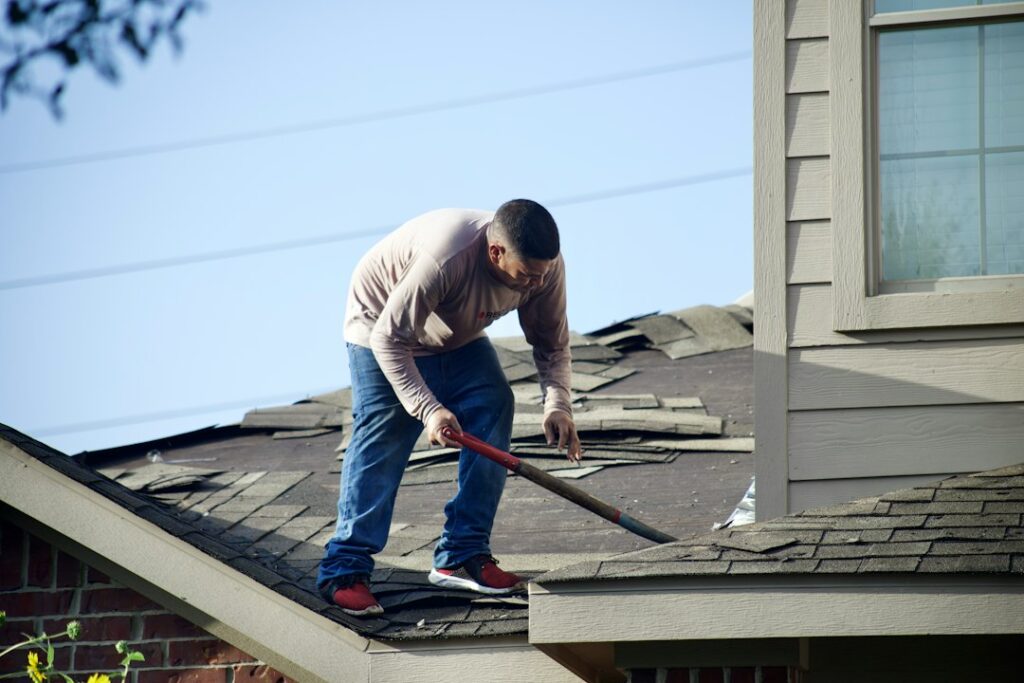
After a major storm, a roof can look normal from the ground while still having damaged shingles, exposed flashing, blocked drainage, or moisture entering the attic. Residents in Carthage, NY should inspect from the safest accessible locations first and avoid climbing onto a roof that may be wet, icy, unstable, or structurally weakened.
A careful post-storm check can help identify urgent problems early. It also creates a useful record for repairs and insurance discussions without turning a minor issue into a larger one.
What should be checked first after a storm?
Start with safety, then inspect the interior and ground-level areas before considering any roof access. Strong wind, hail, falling branches, and heavy rain can create hazards that are not obvious at first glance.
Before approaching the house:
- Look for downed wires, leaning branches, broken glass, and loose exterior materials.
- Stay away from sagging roof sections, collapsed gutters, or areas where debris is still shifting.
- Do not climb a ladder during rain, high wind, icy conditions, or when the ground is unstable.
- Use a flashlight rather than an open flame if checking a dark attic or utility area.
- If water is near electrical fixtures, switches, or outlets, avoid the area until power can be safely shut off.
Storm damage may also affect siding, chimneys, vents, skylights, gutters, and nearby trees. A roof inspection should include these connected parts because water often enters through a damaged detail rather than through the middle of a shingle field.
How can roof damage be spotted from the ground?
A ground-level inspection is often enough to reveal obvious problems. Walk around the house slowly and view the roof from several angles, using binoculars or a phone camera with zoom if needed.
Look for:
- Shingles that are missing, lifted, curled, cracked, or lying in the yard
- Dark or irregular patches where shingle surfaces appear torn away
- Exposed underlayment, roof decking, or strips of roofing felt
- Metal flashing that is bent, displaced, or hanging loose
- Damaged ridge caps, vents, pipe boots, skylight edges, or chimney coverings
- Gutters that are pulling away from the roofline
- Downspouts that have separated or are blocked by roofing debris
- Tree limbs, branches, or other objects resting on the roof
- Granules collecting heavily in gutters or at the base of downspouts
Not every roof mark means storm damage. Older shingles may naturally lose granules, and some dark areas are caused by normal shadowing or biological growth. The concern is a new, irregular change that appeared after the storm or is accompanied by loose materials, water entry, or exposed roofing layers.
What signs of damage can be found inside the house?
The attic and upper-floor ceilings often provide the earliest evidence of a roof leak. Check these areas as soon as it is safe, especially after heavy rain or melting snow.
In the attic, look for:
- Damp insulation
- Wet or discolored roof decking
- Water stains on rafters or trusses
- Drips, puddles, or a musty odor
- Daylight visible through the roof structure
- Rust around fasteners, metal connectors, or roofing components
- Damp electrical wiring or junction areas
Inside living spaces, inspect ceilings, upper walls, closets, and areas around skylights or chimneys. A brown ring, bubbling paint, peeling wallpaper, or soft drywall may indicate water has entered even if there is no active dripping.
Water does not always appear directly below the damaged spot. It can travel along roof decking, framing, insulation, or wiring before reaching the ceiling. For that reason, a stain in one room does not necessarily identify the exact entry point above it.
How should gutters, flashing, and roof edges be inspected?
Roof edges and drainage systems deserve special attention because storms can loosen them without removing shingles. Gutters may become detached, bent, or filled with granules and leaves. A blocked gutter can cause water to back up under the roof edge during the next rainfall.
From the ground, check whether:
- Gutter lines remain straight and firmly attached
- Downspouts are connected and directing water away from the foundation
- Roof edges appear even rather than sagging
- Fascia boards show fresh cracks, stains, or separation
- Flashing around chimneys, walls, valleys, and vents appears lifted or missing
- Water is collecting near the foundation after rainfall
Do not pull on loose metal, climb onto the roof to clear debris, or attempt to reposition flashing from a ladder. Even a small piece of displaced metal can have sharp edges and may be connected to materials that are no longer secure.
What does hail damage look like?
Hail damage can be difficult to confirm from the ground, especially on asphalt shingles. It may appear as scattered dark spots, exposed fiberglass mat, bruising, or small areas where granules have been knocked away.
Hail can also damage:

- Metal flashing and vents
- Gutter edges and downspouts
- Window screens and trim
- Siding and exterior equipment
- Painted surfaces, including outdoor fixtures
A circular mark is not automatically proof of hail damage. Age-related wear, foot traffic, manufacturing defects, and ordinary granule loss can create similar-looking areas. The timing of the damage, its distribution across roof slopes, and the condition of nearby exterior surfaces all help provide context.
Is it safe to walk on the roof after a storm?
Generally, homeowners should avoid walking on a roof after a storm unless they are trained, properly equipped, and certain the surface is safe. Wet asphalt shingles can be slippery, and hidden damage may affect the roof deck beneath them.
Risk is higher when the roof is:
- Steep or difficult to access
- Covered with moss, ice, or wet leaves
- Damaged by a fallen tree or large branch
- Sagging or visibly uneven
- Near power lines
- Surrounded by unstable ladders, snow, or debris
A roof can also be damaged by unnecessary foot traffic. Walking on shingles may loosen granules, crack brittle materials, or disturb flashing. A ground inspection, attic check, and photographs from a safe location are usually more useful than climbing onto the roof immediately.
What should be done if water is entering the house?
If active leaking is occurring, protect people and belongings first. Place containers under drips, move furniture away from the affected area, and use towels to limit spread. If a ceiling is bulging, do not stand underneath it; accumulated water can add weight and cause part of the ceiling to fall.
Photograph the affected areas before cleaning or making temporary changes. Record:
- The date and approximate time the damage was noticed
- The storm conditions, if known
- Rooms and areas affected
- Visible roof or exterior damage
- Damaged belongings
- Temporary steps taken to limit water entry
Do not make permanent roof repairs while the roof is wet or unsafe. Temporary covering may be appropriate in some situations, but it should not involve climbing onto a damaged roof during hazardous conditions. If the structure appears unstable, water is near electrical components, or a tree has struck the roof, the situation requires qualified assistance for safety reasons.
How does local weather affect post-storm roof checks?
Homes in Carthage experience seasonal conditions that can complicate storm inspections. Wind-driven rain, heavy snow, freeze-thaw cycles, ice buildup, and falling branches can each affect roofing materials differently.
After winter weather, damage may remain hidden beneath snow or ice. During spring thaw, leaks can appear around flashing, valleys, roof edges, and areas where ice has repeatedly formed. Summer thunderstorms may produce wind damage or hail, while autumn storms can fill gutters with leaves and place branches on the roof.
A roof that did not leak during the storm may still develop problems later. Small openings can allow moisture into insulation or decking, and repeated freezing and thawing may enlarge gaps. Rechecking the attic and ceilings after the next rainfall is sensible if the storm caused visible roof or drainage damage.
IMAGE_ALT:
Homeowner examining roof shingles and gutters from the ground after a heavy storm.
