
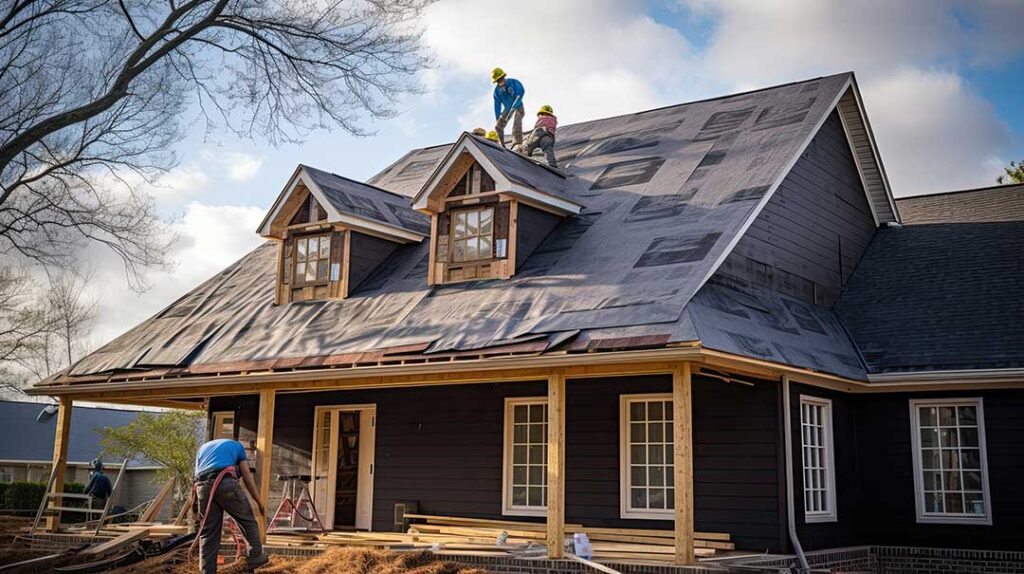
Tree limbs are a familiar part of the landscape in Carthage, NY, but branches near a home can create several roofing problems. A limb does not have to crash through the roof to cause damage; rubbing, falling twigs, trapped moisture, and blocked drainage can shorten the life of roofing materials over time.
Understanding the risks makes it easier for homeowners to recognize trouble early and respond safely.
How can tree limbs damage a roof?
Tree limbs can damage roofing through impact, repeated contact, moisture retention, and debris buildup. The severity depends on the limb’s size, its height above the roof, wind exposure, and the type and age of the roofing system.
A large branch may break shingles, puncture the roof deck, damage flashing, or bend gutters. Smaller branches can scrape the surface during windy weather, while twigs and leaves may collect in valleys, around chimneys, and near roof edges.
Common forms of damage include:
- Cracked, torn, or missing shingles
- Dented metal flashing or bent drip edges
- Punctures in roofing membranes
- Damaged gutters and downspouts
- Broken soffits, fascia, or trim
- Exposed roof decking
- Leaks around roof penetrations
- Loose or displaced shingles after a storm
Even when the roof appears intact from the ground, impact can loosen fasteners or create small openings that allow water to enter later.
Why are rubbing branches a problem if they never fall?
A branch that repeatedly touches the roof can wear away the protective surface of shingles. Wind causes the limb to move back and forth, creating friction that may remove granules, lift shingle edges, or expose the asphalt layer beneath.
Over time, rubbing limbs may also:
- Scratch metal roofing
- Damage protective coatings
- Create openings around ridge caps
- Disturb flashing near walls or chimneys
- Drop bark and organic debris onto the roof
This type of damage often develops gradually and may be missed because there is no single dramatic event. Dark streaks, bare patches, loose granules in gutters, or a line of damaged shingles beneath a branch can indicate repeated contact.
Branches should not be trimmed from a roof while someone is standing on the roof or using a ladder near unstable limbs. Cutting can change the branch’s balance and cause it to swing unexpectedly.
How do trees contribute to roof leaks?
A falling limb can cause an obvious hole, but smaller damage may create a slow leak. Water can enter through cracked shingles, displaced flashing, or punctures in the underlayment. The first visible sign may be a ceiling stain rather than an obvious roof defect.
Water entry may appear as:
- Brown or yellow ceiling marks
- Damp attic insulation
- Musty odors
- Peeling paint near the ceiling
- Drips during rain or thawing conditions
- Darkened wood around roof penetrations
In the local climate, freeze-and-thaw cycles can make small openings worse. Water that enters a crack may freeze, expand, and gradually enlarge the damaged area. Winter snow and ice can also conceal roof defects until warmer weather produces a leak.
If water is actively entering the home, place a container beneath the drip if possible and keep people away from sagging ceilings. Electrical fixtures near water should be treated as a safety concern.
Can leaves and small branches shorten roof life?
Yes. Organic debris can hold moisture against roofing materials and block normal drainage. Leaves often collect in roof valleys, behind chimneys, beneath overhanging branches, and along areas where roof sections meet.
Persistent dampness can contribute to:
- Premature shingle deterioration
- Algae, moss, or lichen growth
- Rot in roof decking or fascia
- Corrosion of metal components
- Ice buildup near blocked roof edges
- Gutter overflow during heavy rain
Debris is especially troublesome on roofs with low slopes or complex designs because water may drain more slowly. A small amount of debris may not cause immediate damage, but repeated accumulation can keep parts of the roof wet for extended periods.
Removing debris from the ground with a soft roof rake may be appropriate in some situations, but homeowners should avoid scraping shingles or using tools that can tear the surface. Walking on a wet, icy, steep, or damaged roof adds significant fall risk.
What signs should homeowners look for after a storm?
After high winds, heavy snow, or a summer thunderstorm, the safest first inspection is from the ground. Binoculars can help reveal problems without requiring anyone to climb onto the roof.
Look for:
- Branches resting on the roof
- Shingles that appear lifted or missing
- New dark or bright patches
- Sagging gutters
- Broken tree limbs near utility lines
- Debris concentrated in roof valleys
- Water stains inside the attic or upper rooms
- Fresh damage to siding, trim, or windows
Check the attic only if it can be done safely from a stable floor. Look for daylight through the roof deck, damp insulation, wet wood, or signs of water trails. A leak may not be directly below the exterior damage because water can travel along rafters and decking.
Do not climb onto a roof after a storm if surfaces are wet, icy, unstable, or covered with debris. A roof that looks mildly damaged may have hidden structural weakness.
How close is too close for a tree near a house?
There is no single distance that applies to every tree. The risk depends on the tree’s mature size, condition, lean, branch strength, prevailing winds, and the height of nearby buildings.
A tree deserves closer attention when:
- Large limbs extend above the roof
- Dead branches are visible
- The trunk or major limbs show cracks
- The tree leans toward the house
- Roots appear damaged or lifted
- Branches scrape the roof or siding
- The tree has been weakened by disease, insects, lightning, or construction work
Trees do not need to be removed simply because they are near a house. Regular observation and appropriate pruning can reduce the chance of roof contact. However, cutting large, elevated, or damaged limbs can be hazardous, particularly near overhead electrical lines or structures.
What should happen after a limb hits the roof?
Safety comes first. Keep people away from the affected area, especially if a branch is still under tension or has pulled down part of the roof. Do not walk beneath hanging limbs or attempt to move a large branch without proper equipment and training.
The immediate priorities are:
- Check for visible openings from the ground
- Look for interior signs of water entry
- Protect belongings from active leaks
- Photograph damage when conditions are safe
- Keep temporary coverings secured and away from electrical hazards
- Arrange for hazardous limbs to be handled safely when necessary
A temporary cover may reduce water entry, but it should not be attached in a way that creates additional holes or requires climbing onto an unsafe surface. If the roof deck is sagging, a large branch is lodged in place, or structural damage is suspected, the area should remain clear until it can be safely evaluated.
How can homeowners reduce future tree-related roof damage?
Prevention begins with observing the trees and roof together rather than treating them as separate parts of the property. Branches that are harmless in calm weather may become a problem when loaded with snow, coated in ice, or pushed by strong wind.
Useful maintenance habits include:
- Inspecting roof-adjacent trees at least seasonally
- Removing dead or visibly weakened branches safely
- Keeping branches from resting on shingles
- Clearing leaves and twigs before they accumulate
- Checking gutters after major storms
- Watching for changes in tree lean or root exposure
- Inspecting the attic after a known impact
- Keeping roof surfaces free of unnecessary foot traffic
The most vulnerable periods may include late fall, winter storms, and spring thaw, when snow, ice, saturated soil, and changing temperatures can place added stress on trees and roofing components. Regular observation is often enough to identify a developing hazard before a branch causes a leak or emergency damage.
