

What does hurricane preparation mean for a roof in Carthage, NY?
Preparing a roof for hurricane season means reducing the chance that wind-driven rain, falling branches, loose materials, or blocked drainage will cause damage. Although Carthage, NY is inland, tropical storms and hurricane remnants can still bring strong wind, heavy rain, rapid weather changes, and power outages.
The most useful preparation happens before a storm is approaching. A roof that appears sound from the ground may still have loose flashing, aging sealants, clogged gutters, or vulnerable attachments that become problems during severe weather.
How should a roof be inspected before storm season?
Begin with a ground-level inspection, then arrange a closer inspection only if the roof can be accessed safely. Walking on a sloped, wet, moss-covered, or deteriorated roof creates a fall hazard and can damage shingles.
Look for:
- Missing, cracked, curled, or lifted shingles
- Exposed fasteners or dark areas where roofing material has worn away
- Loose metal flashing around chimneys, vents, skylights, and roof edges
- Gaps or deteriorated sealant around penetrations
- Sagging areas along the roofline
- Granules collecting in gutters or near downspouts
- Water stains on attic insulation, rafters, or roof decking
- Daylight visible through the roof deck from inside the attic
Small defects deserve attention because wind pressure can enlarge an existing weakness. A lifted shingle may allow rain beneath several nearby courses, while a loose piece of flashing can permit water into wall cavities or attic insulation.
Why do roof edges and flashing matter during high winds?
Roof edges, rakes, eaves, and flashing are especially exposed to wind. If these areas are loose, wind can get beneath roofing materials and create lifting pressure. Once a small section begins to move, damage can spread across a larger portion of the roof.
Inspect the following areas carefully:
- Drip edges along the lower roof perimeter
- Metal flashing where roof planes meet walls
- Flashing around chimneys and plumbing vents
- Ridge caps and hip caps
- Fascia boards and soffits
- Gable-end trim and roof-edge coverings
Flashing should lie flat and should not have open seams, rust holes, or visible movement. Sealant is not a substitute for properly installed flashing. Repeatedly applying caulk over a failing joint may hide the problem temporarily without stopping water entry.
What should homeowners do with gutters and downspouts?
Clean gutters and downspouts before severe weather is expected, especially if trees surround the home. Leaves, twigs, and roof granules can restrict drainage and cause water to back up beneath the edge of the roof.
Confirm that:
- Gutters are firmly attached to the fascia
- Downspouts discharge water away from the foundation
- Elbows and extensions are not separated
- Water can flow freely through the entire system
- Gutter guards, if present, are not packed with debris
- Downspouts are not frozen or blocked when temperatures fall
Heavy rain can overwhelm a drainage system even when the roof itself is intact. In colder climates, damaged gutters may also retain water that later freezes, expands, and pulls fasteners away from the fascia.
How can nearby trees and outdoor objects affect the roof?
Tree maintenance is part of storm preparation. Dead limbs, weak branches, and branches that already touch the roof can break during strong wind and cause direct impact damage. Branches rubbing against shingles may also wear away protective granules over time.
From a safe location, check for:
- Dead or hanging limbs above the roof
- Branches resting against shingles, gutters, or siding
- Trees leaning toward the house
- Loose outdoor structures near the roof
- Patio furniture, ladders, planters, or tools that could become airborne
Outdoor objects should be secured or stored before storm conditions arrive. A lightweight item can damage shingles, windows, siding, or vehicles if lifted by wind.
Should attic ventilation and insulation be checked?
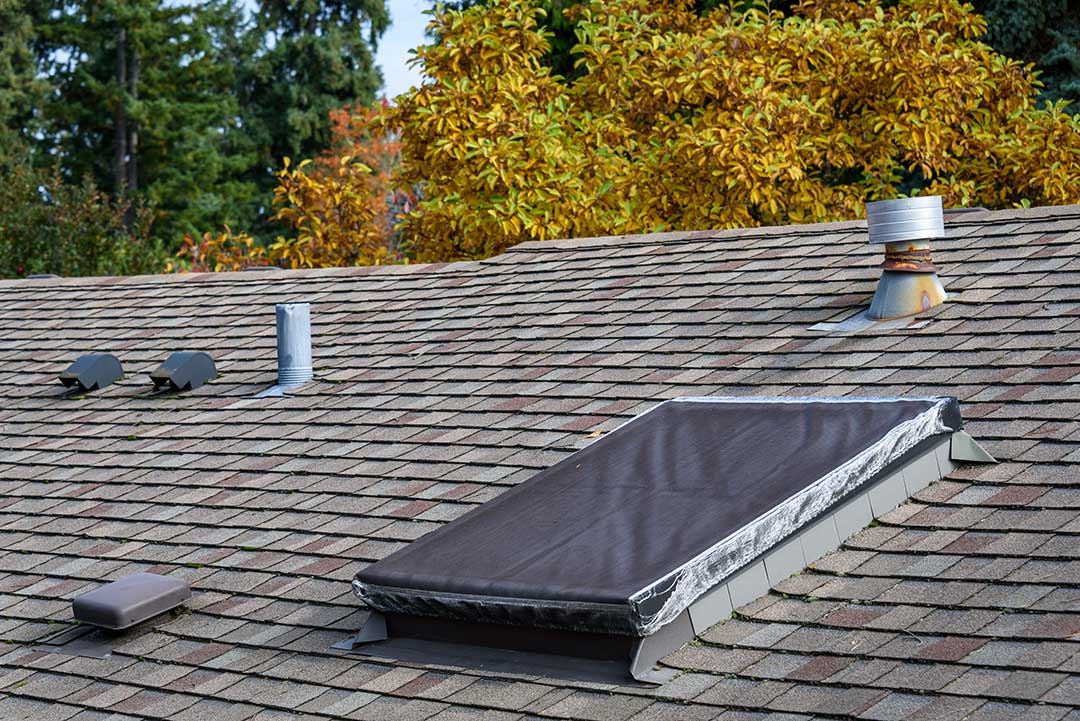
Yes. Proper attic ventilation and insulation help manage moisture, but they do not make a roof hurricane-proof. Before storm season, inspect the attic for damp insulation, mold-like staining, rusted fasteners, or evidence of previous leaks.
Vent openings should be protected from animal entry and should not be blocked by insulation. However, homeowners should not seal or cover ventilation openings casually. Poor ventilation can trap moisture and contribute to condensation, wood deterioration, and premature roofing damage.
A roof leak does not always appear directly below the damaged area. Water can travel along rafters or roof decking before reaching the ceiling, so stains may be several feet away from the actual entry point.
What should be checked on older roofs?
Older roofs deserve closer attention because materials may have less flexibility and fewer remaining years of service. The roof may still look acceptable while its wind resistance has declined through age, repeated freeze-thaw cycles, and weather exposure.
Check whether the roof has:
- Widespread granule loss
- Brittle or cracking shingles
- Repeated patching in the same area
- Sagging or uneven decking
- Rusted or exposed fasteners
- Persistent leaks after ordinary rain
A patch that stops a minor leak may not address broader deterioration. Storm preparation should focus on the roof’s overall condition, not just on the most visible defect.
What should be done if a storm is forecast?
Complete outdoor inspections and repairs before conditions become dangerous. Do not climb onto the roof, use ladders, or work near trees during high wind, lightning, or heavy rain.
Before the storm:
- Clear gutters and roof valleys if they can be reached safely
- Secure loose outdoor items
- Close and latch windows and exterior doors
- Check that attic access panels are properly fitted
- Photograph existing roof conditions for household records
- Keep tarps, buckets, and towels available for emergency water control
- Review how electrical power, generators, and sump pumps will be handled safely
Temporary coverings may reduce interior water damage after a failure, but they must be installed safely and should not involve climbing onto a damaged or unstable roof.
What if the roof is damaged during the storm?
After the storm passes, inspect from the ground first. Look for missing roofing materials, displaced flashing, fallen branches, sagging areas, and water entering the attic or living space.
If water is entering, place containers beneath drips and move belongings away from the affected area when possible. Avoid electrical fixtures, wet insulation, and visibly unstable ceilings. Do not enter an attic if the floor is uncertain, the structure is damaged, or electrical hazards may be present.
Roof work becomes a safety issue when there is structural damage, active electrical risk, a steep or slippery surface, or a need to work near power lines. Those conditions require trained assistance rather than an improvised repair.
Storm preparation cannot prevent every loss, but it can identify weak points before wind and rain expose them. For households in Carthage, regular roof checks are especially useful because the same roof must handle summer storms as well as the region’s later cold, ice, and snow.
